

Anna Graves on healing and finding her way back home

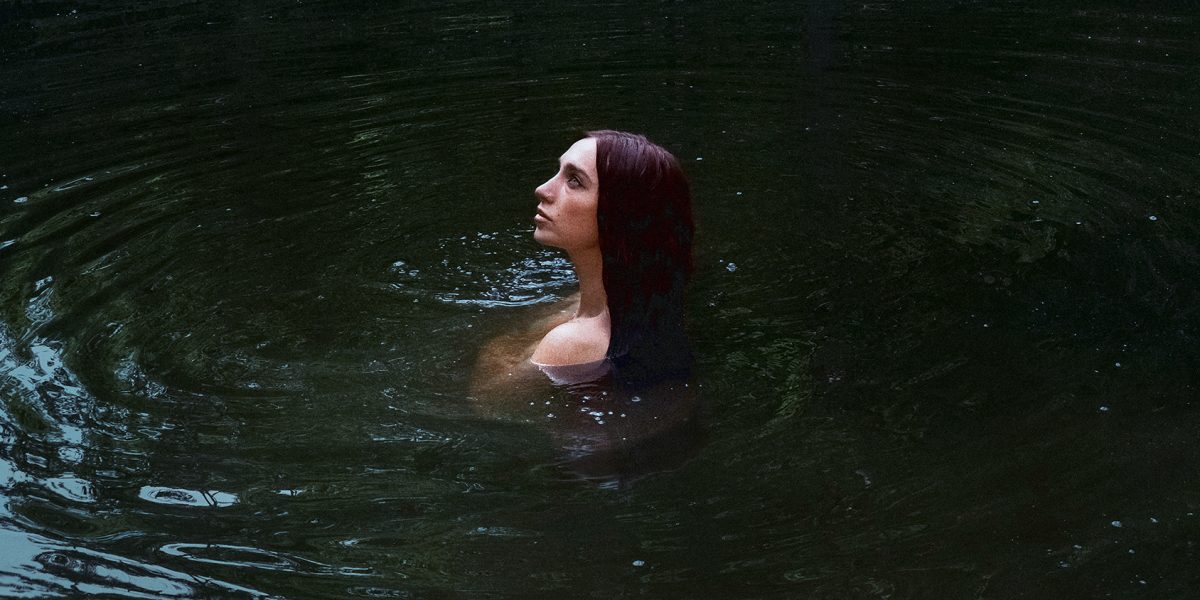
Belly Up Tavern, a historic venue in Southern California, has been delivering live music since 1974. From the well-known and world-renowned, to the up-and-coming and hidden gems. On a seasonably warm late-winter night, along the Southern California coast, Anna Graves was the up-and-coming, hidden gem that would grace this sleepy beach town with her acoustic and folk sound.
Barefoot, dressed in a black, ankle-length, asymmetrical tube dress, with her hair pulled back into a ponytail, Anna stood alone on the dimly-lit stage, accompanied by her acoustic guitar, harmonica and a coyote vertebrae (more on that later). Looking out into a brightly lit audience, Anna Graves weaved together harmonious imagery with her guitar, harmonica and gentle voice. Graves’ set lasted for 45 minutes, and between songs like “Burn On,” “Bluebird,” “Minnesota on My Mind,” and “Hollow Bones,” the Minnesota native gave context to each tune.
The 28-year-old songstress’ soft and melodic voice filled the room, drawing the audience into a place that evokes imagination and yearning, and while tapping into a sense of peacefulness. It’s almost as if, through her musical storytelling, she is weaving together a fairy tale of sorts. And considering that she has spent much of her life on a farm, her music celebrates the beauty that is found in nature–even the parts that don’t seem beautiful. Whether intentional or not, Anna’s music sometimes conveys how nature and the human experience tend to mirror one another.
While she is still currently touring with Jonah Kagen on the Sunflowers & Leather Tour and preparing for the release of her debut album, Anna took some time to connect with Quip Magazine to give us a glimpse into her songwriting process, self-care on the road, and her upcoming album, America’s Greatest Burnout.
Jade Newton: What helps you maintain your motivation and passion for creating and performing music? In other words, how do you avoid or handle burnout?
Anna Graves: It’s funny because my [upcoming] album is actually called America’s Greatest Burnout. I felt as though I had been spinning my wheels in my musical career for years and getting nowhere, so it really took going back home to reground myself and rest to start making real progress. I felt like I had experienced burnout before I was even able to really get started. There is so much pressure to be excellent when it is truly excellent to just be. Once I was able to be comfortable in my own silence again, I was able to find the words I was looking for. I think it is incredibly important to recognise when your mind and body need rest and to honour that. It is the only way to have longevity in anything.
It can be easy to get distracted in this industry and lose sight of what truly matters. When I feel disconnected or as though I’m losing motivation or passion, I bring a journal out to a remote area in nature and just give myself space to think and write. I am always able to make sense of myself in nature, and am able to realign with the “why.” I make music because it gives me joy, feeds my wonder, and has the ability to heal myself and others. We as people will always need art.
JN: How do you practice self-care on the road and during moments of writer’s block?
AG: As far as self-care on the road, I try to be around nature as much as possible. That’s always the way I’m able to recenter and ground myself. Sleep is important, and resting when your body is telling you to rest is important. Touring can be really hard on the body, so staying healthy is the number one goal.
As far as moments of writing block, I try to tell myself that ‘if I’m having issues writing something down, I’m not meant to write that day. I’m meant to live, to experience the input of creativity rather than the output. Inspiration will always find you again. I got miles ahead of me, and I’m not worried about getting anywhere fast.’
JN: I know you play the harmonica and the guitar; do you play any other instruments?
AG: I play the piano, too, however, I have always felt closest to the guitar. I feel as though it’s the way my soul can speak.
JN: Do you experiment with other sounds and genres?
AG: I have a deep appreciation for all musical genres. I grew up listening to folk, rock, and soul, and have explored many genres myself during my musical journey. I believe that being an artist is exploring without boundaries; that’s the fun of it. I’m happy to have settled back into my roots of storytelling with my acoustic guitar, but I’m excited to see where else it will take me.
JN: Opening for Stevie Nicks was probably a fantastic experience. Tell me a little bit more about that experience, please.
AG: Getting to share the stage with Stevie Nicks, especially in my hometown, was otherworldly. I am such a fan of hers as an artist, as a person, and as a philanthropist. I will never forget meeting her and listening to her hilarious stories as she enchanted the whole room with her mesmerising aura and incredibly genuine and down-to-earth personality. She will always be my most influential artist, and I have never been so awestruck in my life.
JN: Do you compose music as well?
AG: I tried to learn to read sheet music, but it didn’t last very long (laughs). I have the utmost respect for those who can. I have always learned by ear, but would love to push myself one day and learn to read sheet music. My writing is based on feelings and sounds that I think are interesting at the moment, and I build lyrics that fit the feeling of those melodies and chords. My favourite kind of writing is like when you cook; it’s all a process of creativity and patience, and you end up with something beautiful.
JN: When you’re performing live, how do you tune out the “noise” and stay focused through those opening sets when the crowd isn’t responding the way you’d like or busy doing everything else but enjoying your show?
AG: Rowdy crowds are bound to happen, but I always remember that for most people in the crowd, this is their night to escape their busy lives and have fun with their friends. I try not to take it too personally. Coming together with the crowd over lyrics and stories feels like part of the healing process for all of us. I feel profoundly connected to the audience when I sing my songs, even if there are just a few people listening. [It’s] like we are sharing every word. That feels wildly powerful to me. I have really loved Jonah’s fans, and all of the fans of previous artists I’ve toured with. I feel as though many of them really resonate with my music as well, and I’ve had a great time getting to play for them.
JN: Oftentimes, a change of environment can have a positive effect on our creativity and creative process. Did you notice a change in your approach to songwriting when you moved back to Minnesota? And if so, what changes did you notice?
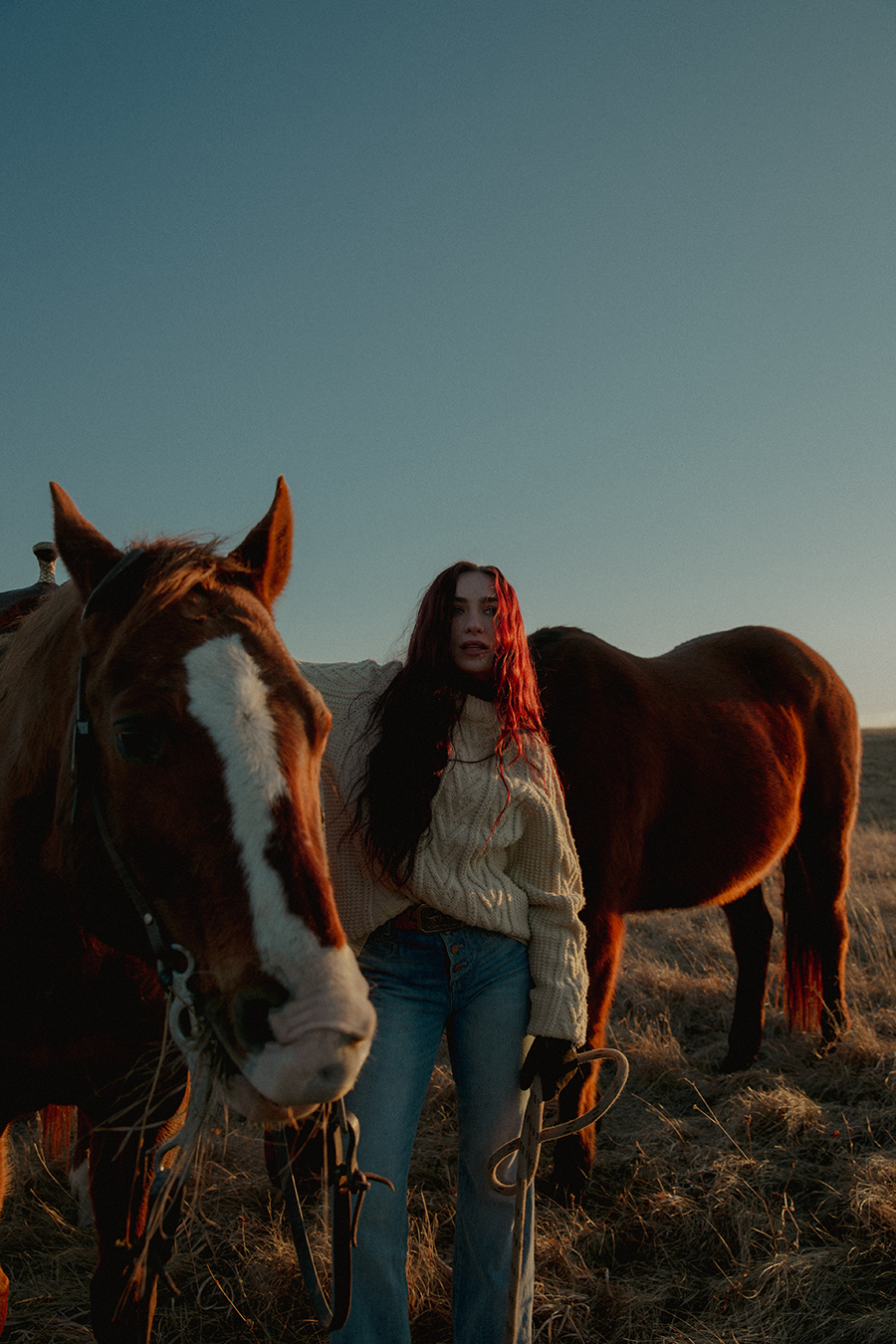
AG: Everything changed for me when I moved back to the farm in Minnesota. I was finally able to have the space to breathe and hear my own thoughts again. And working with animals, I saw a big change in my mental health. Our dear friend runs a ranch rescue, and I was able to help foster horses that were neglected and abused. So between that and being around my family, I was able to reground and recalibrate myself. From there, inspiration flowed out of me, and I was able to play and write freely again. I found the girl inside of me that I had been missing for so long; I found my home.
JN: What is the approach you take to songwriting?
AG: I tend to write my best songs when it’s a feeling that’s been creeping up through my chest; almost tensing my throat until I write it down and physically sing it out. It always feels like some healing–kind of a celebration, almost. The ability to at least start the process of getting through something that’s been causing you pain, or even starting to understand what brings you the kind of joy that you can’t explain. I think by following that mentality…for me, songwriting is writing what I need to hear in the moment. And there’s a strong chance someone else out there needs to hear the same thing.
JN: Which of your songs was the most challenging for you to write?
AG: The most challenging songs for me to write are the ones that cause me to look inward and write about hard moments in my life; it always feels like an intense form of therapy. “Bluebird” was a great example of this for me. There was a lot of pain and hardship that went into the lyrics, but a lot of healing that came out of them.
JN: When collaborating with another artist, I’m sure the desire is to create a cohesive work of art; how do you balance your artistic identity with theirs?
AG: I try my best to put myself in their shoes, as I know how daunting it is to be open and vulnerable with strangers. My goal is to just be an extra source of inspiration if they need it and allow them to tell their truth. That is really all that matters.
JN: What can we look forward to from you for the remainder of 2026?
AG: I am really looking forward to putting out my debut album, America’s Greatest Burnout. It’s a story of picking yourself back up from the dirt with gratitude and grit, and how I found the way back to myself again. Every song on the record was a meaningful moment throughout my early journey as an artist and a young woman, and I am so excited to finally share it with the world.
Images by Josefine Cardoni.


You may also like
Indy Fontaine talks new music, tropical roots, and her breakout chart moment

Sour Beat is bringing mosh pit energy to Latin Music

For GIULIA BE, storytelling comes first and in three languages
From competitors to bandmates with Beau Nectar
Shad on hip-hop future, today and tomorrow

BLONDETING on supporting women in DNB and making music from scratch