
Machine Gun Kelly delivers a defining show in Montréal


Machine Gun Kelly (MGK) didn’t just bring the Lost Americana Tour to Centre Bell on Wednesday night — he detonated it. What unfolded over two high-octane hours blurred rap, pop-punk, and country twang into one of MGK’s most confident and chaotic shows to date, a show that felt less like a concert and more like stepping into an entirely new universe built by Colson Baker himself.
Indie-pop riser Julia Wolf opened the night with her moody, Twilight-coded aesthetic, cutting through the arena with dark synths, soft vocals, and a self-assured presence that fit naturally within MGK’s universe. “I don’t know nothing but I know I’m alive” — and MGK made sure everyone in North America’s largest arena felt the same on Wednesday night.
MGK, also known as Kells, has long treated his live shows like a proving ground for reinvention, and this one expanded his mythology with a sense of scale that felt both cinematic and deliberate. Montréal — a city he holds dear to his heart — wasn’t receiving a recycled version of previous tour stops.
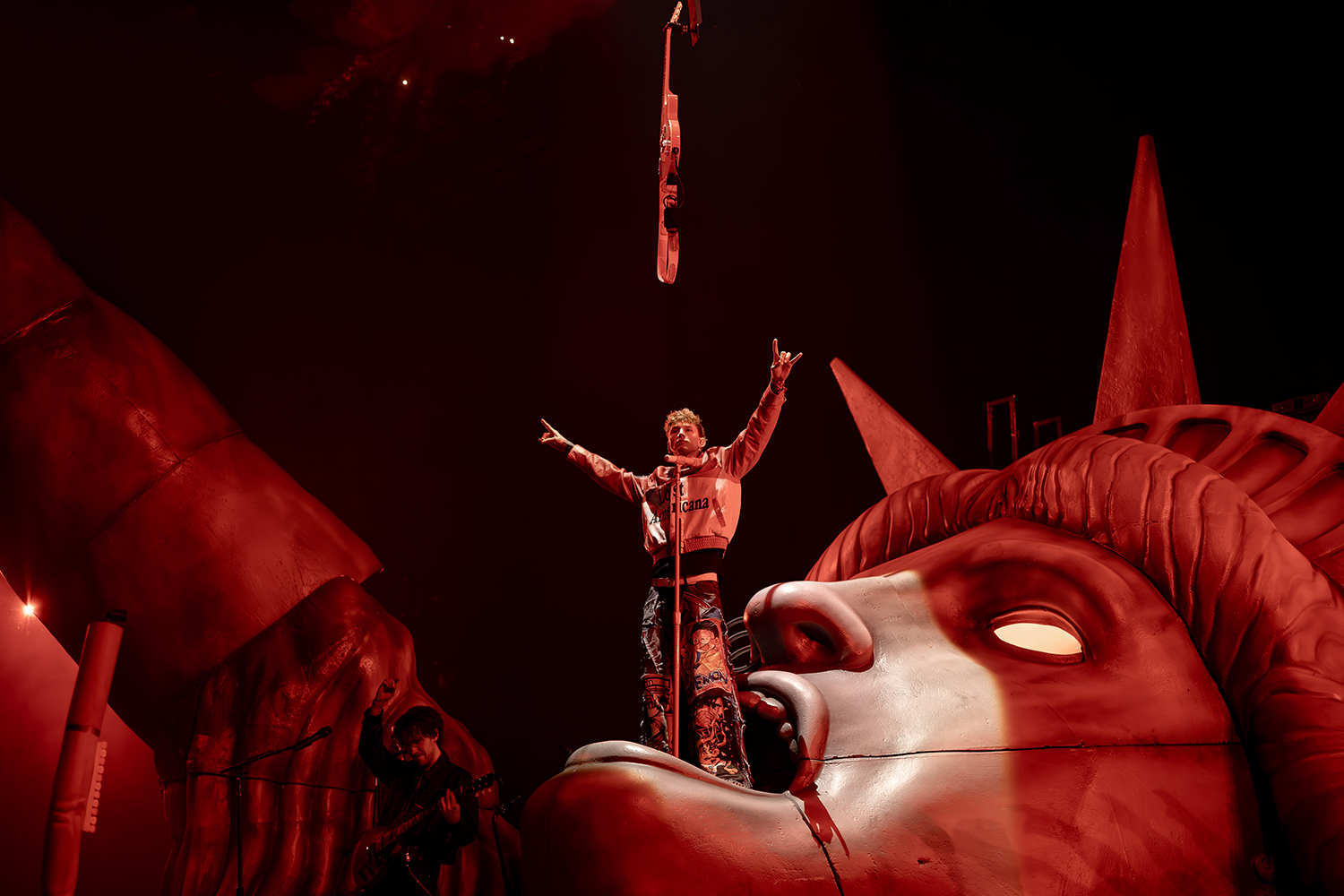
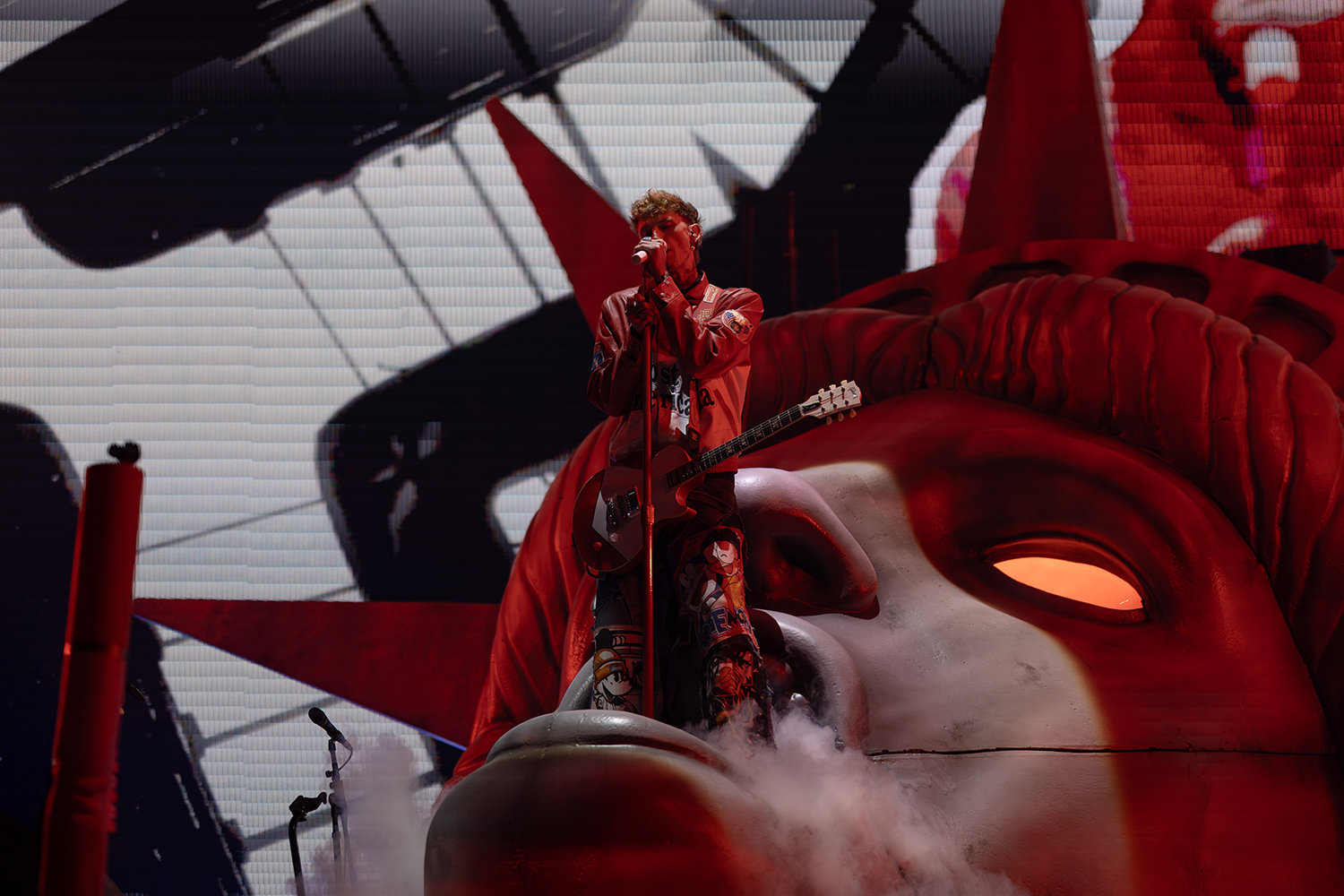
When the curtains lifted, a towering, distressed Statue of Liberty dominated the stage. Very much on brand for Kells, in every sense, complete with a cigarette mic stand and a nose ring shining under the lights. MGK emerged through the statue’s mouth as “Outlaw Overture” erupted, gripping a guitar that descended from the rafters like a relic dropped from another world.
It was peak MGK: audacious, dramatic, and unapologetically committed to the bit.
The crowd matched the chaos. Fans arrived in full MGK cosplay dressed in denim, leather, lace, fringe, cowboy hats, pink flare, and pop-punk spikes, turning the Centre Bell floor an extension of MGK’s world.
“I spent three weeks planning this outfit,” shared Angela, 23. “I live inside the world he builds”.
MGK toggled between genres with ease. His medley of rap-era staples — “Maybe,” “Wild Boy,” “El Diablo” hit with the momentum longtime fans expected, while tracks from his five-year-old album, Tickets to My Downfall, still carried the raw, adolescent punch that made the album a cultural milestone.
Pointing out handmade signs during “Bloody Valentine,” arguably the night’s turning point, MGK brought fans on stage, giving them a few minutes in the spotlight and letting the audience become part of the show as the arena cheered.
From there, he shifted into an extended interaction, telling the crowd he wanted to give them a moment “to feel themselves.” With “Secrets” playing, he paced across the stage, hyping each section of the arena. MGK was at his most natural, breaking the fourth wall and letting the audience steer the moment.
When the lights dimmed for “Lonely,” the chaos gave way to quiet. The weight of the lyrics settled over the arena, showing MGK’s ability to move from spectacle to sincerity without losing the crowd for a second.

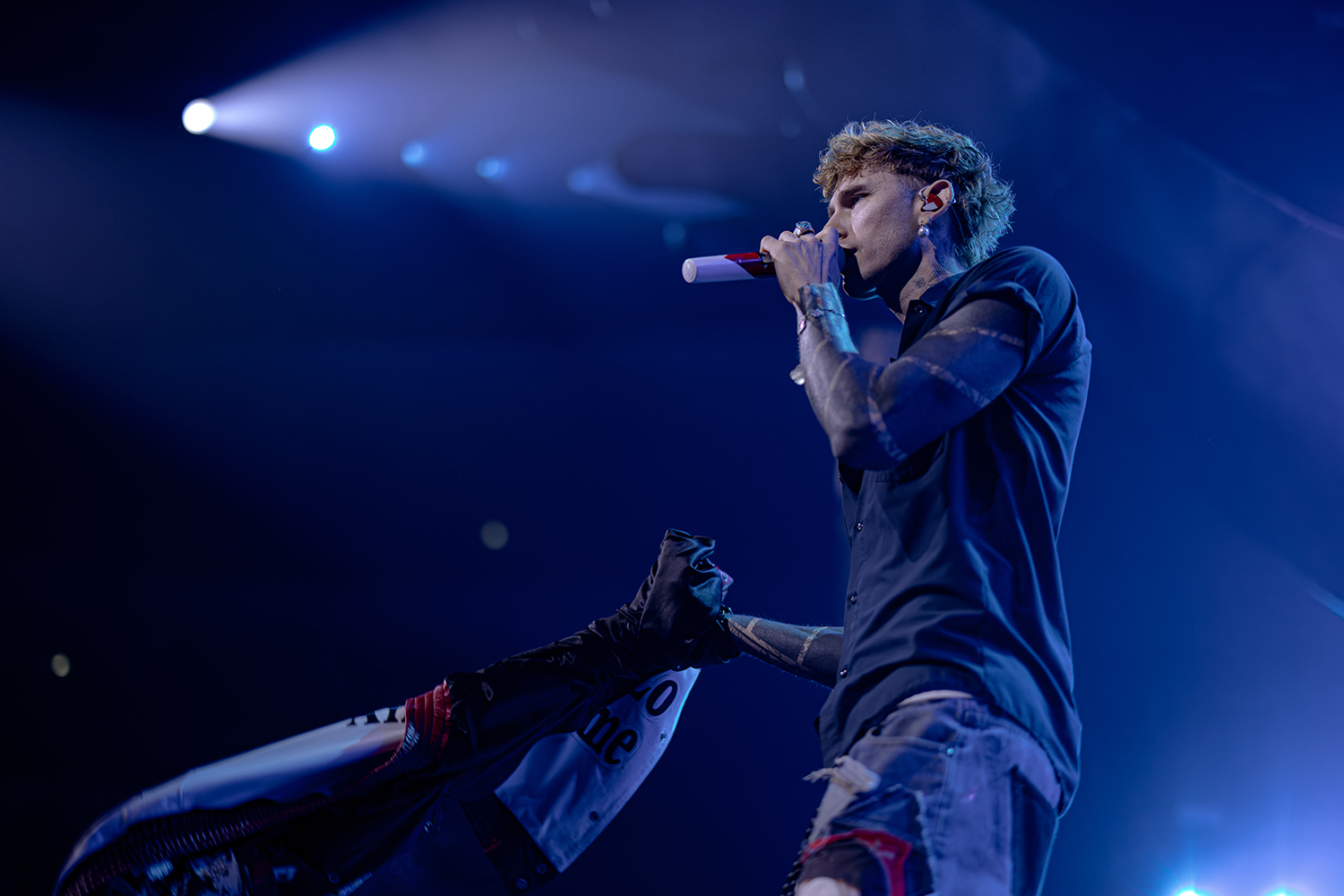
The emotional thread continued at the B-stage, where MGK sat on a stool and stripped the show down to its bones. Julia Wolf joined him again for their cover of “Iris,” a highlight of the night that blended heartbreak and nostalgia with arena-level force.
Continuing on the main stage, he performed “Play This When I’m Gone,” dedicating it to his daughters. “Papercuts” brought out the razor-blade guitar, shooting sparks as pyrotechnics and smoke filled the arena. From “Cliché,” “Sweet Coraline,” and “Vampire Diaries,” the energy surged again and refused to let up. Montréal sang every lyric like it belonged to them.
“I’ve been with him since the mixtapes. 14 years, and I’ve never seen him this locked in,” said Cameron, 31, who travelled from Ottawa for the show. “You don’t stick with an artist this long unless they give you a reason. Tonight, he gave us ten.”
What exactly is MGK in 2025?
At Centre Bell, the answer was clear; everything he wants to be — rapper, rocker, pop-punk frontman, emotional narrator, father, and entertainer.
As the final notes of “Vampire Diaries” rang out, a mix of cheers, tears, and applause filled every corner of the arena. MGK created a moment, a shared experience that Montréal will carry long after the lights went down. For fans, it wasn’t just a concert. It was Lost Americana brought to life.

You may also like

Zeds Dead “Return to the Spectrum of Intergalactic Happiness” live

Earl Sweatshirt says “Live Laugh Love” to all
Bringing jazz music to the forefront with SHEBAD
Of Monsters and Men make Toronto the final stop on their North American tour
Navy Blue takes yet another step forward with “The Sword and the Soaring”
Portugal. The Man and La Luz take over History for a psychedelic fusion