

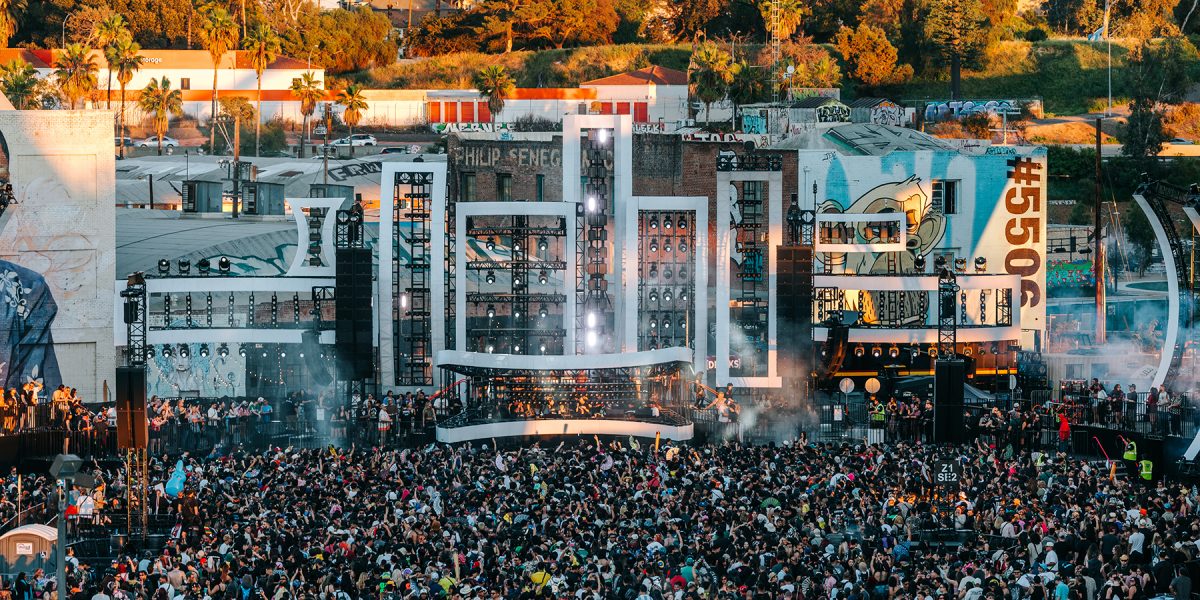
Skyline Festival has always carried itself like an event born out of a warehouse. Raw, communal, sweaty, urgent, and loud. Expo Park was beautiful, but there’s something consonant about pounding industrial techno against the massive backdrop of the Sixth Street Bridge, looming over us with a chilling scale. Now nestled against the LA river, Skyline Festival found a nice little home. If you’ve driven here at night, then you know the feeling: that sweeping arc lit against darkness with downtown on one side, the sprawling east DTLA stretches out on the other. The vibe remains when DJs push thousands into the kind of collective trance that happens when the BPM scores a critical hit: an amalgamation of preparation, hype, and vibe, imposed on every sightline. Graffiti-tagged walls visible just beyond the perimeter, the industrial hum of the city folded into basslines. The rail infrastructure surrounding the grounds was the context. Club music was born in places like this.
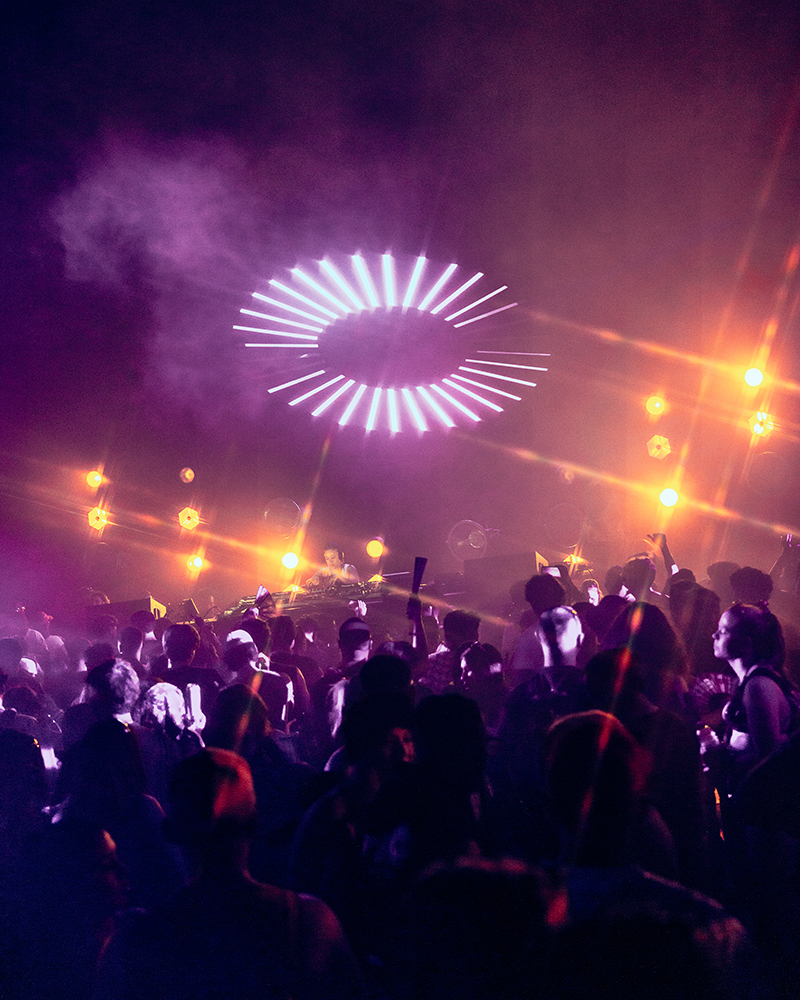
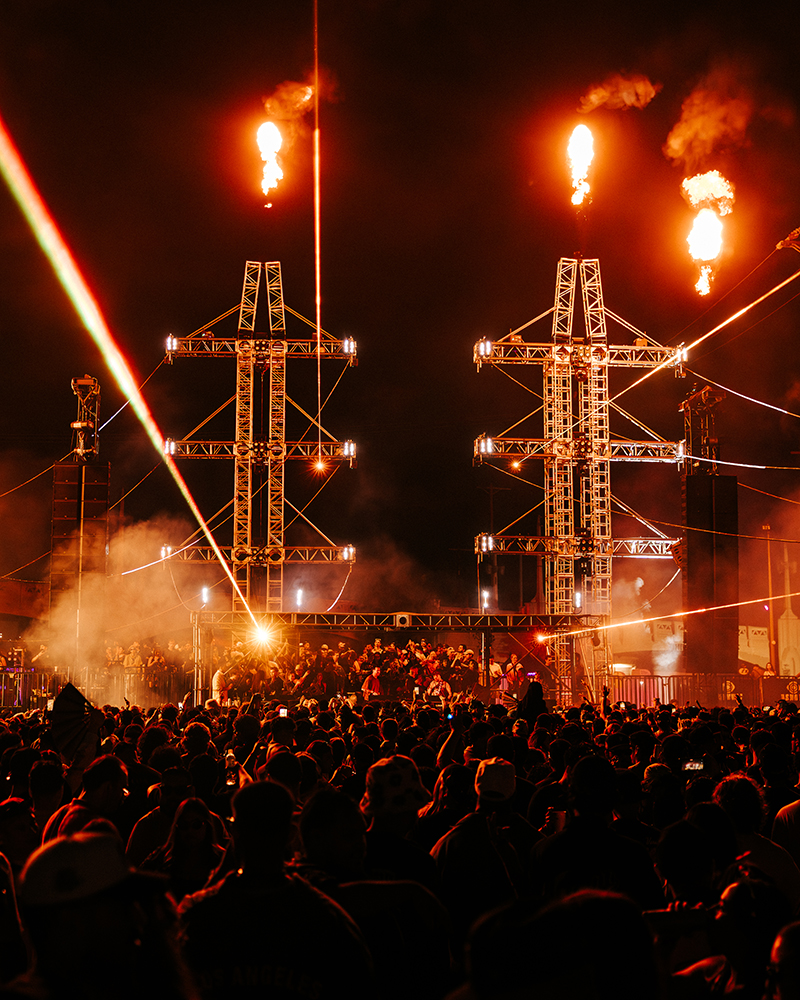
Enviornment images by Brandon Densley for Skyline. Cover image by Jamal Eid for Skyline.
The production overhaul this year was the most striking change beyond the venue itself, and each stage was visually stunning in a way that felt intentional instead of decorative. Our four venues here are Eastside, Westside, Downtown, and Arts District, all repping a distinct style and only a stones throw away from their actual namesake. Naturally each was designed to serve the particular energy of the acts they nurtured.
Eastside leaned hard into a techno-industrial aesthetic that drew from the actual power lines, metallic and harsh geometry it was pocketed between. Downtown and Arts District operated similarly. The former, hosted in partnership with Resident Advisor, leaned experimental and selective. Arts District championed local and rising talent, giving the festival’s community roots a physical stage. Together the four stages morphed together like Voltron and created something greater than each part individually.
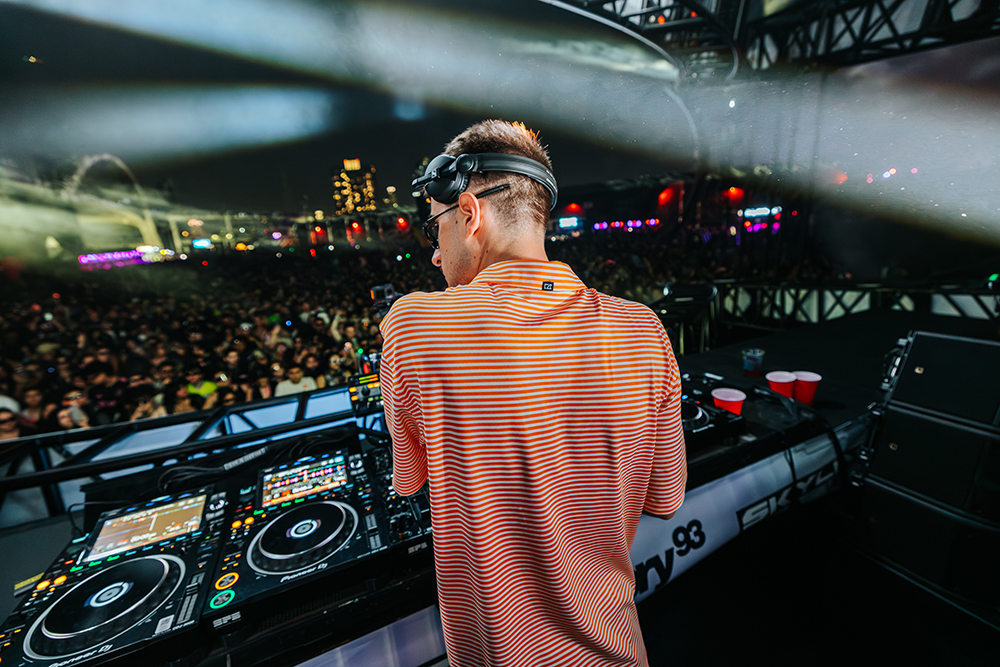
The line up was a blur, and I found myself unfamiliar with most of the artists featured this year. It was a learning experience that I admit was a bit daunting, especially walking into the festival grounds. Quickly though, I learned. Danny Daze and Ryan Elliott brought the kind of complementary chemistry that B2Bs promise but rarely deliver. Two selectors with distinct sensibilities trading off in a way that felt conversational albeit a bit competitive as well. Beltran, over on the Eastside stage, spun with rhythmic confidence, with a great track selection.
Adrián Mills brought an explosive energy: channeling trance and bass influences into sets that felt propulsive and alive. I Hate Models has been blowing up the past year, and their urgent and powerful set was dangerously close to gabber than I thought they would dare.
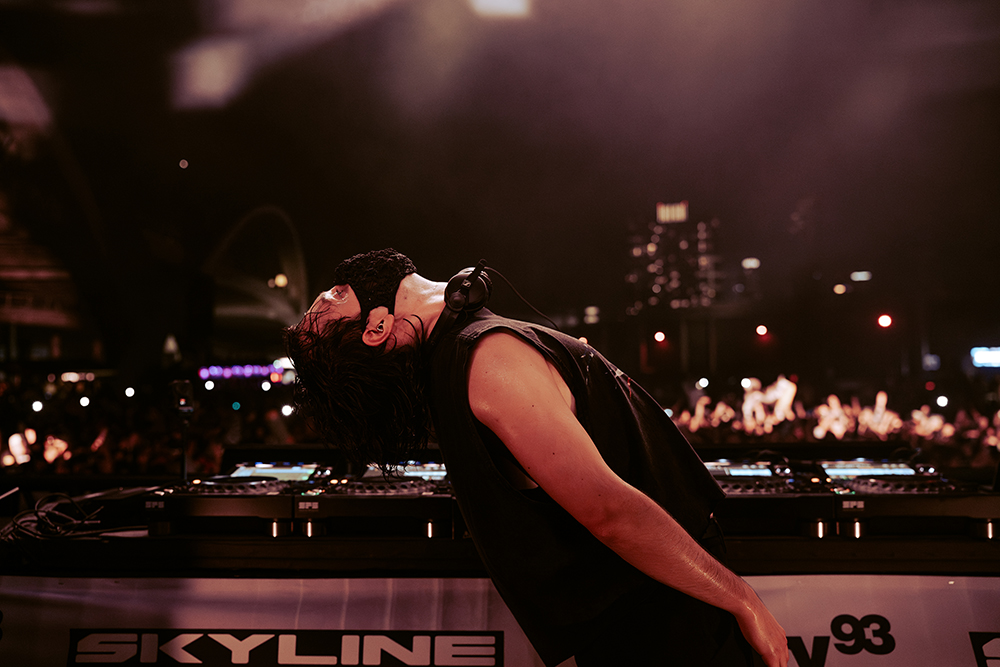
It was Eli Brown on the Eastside stage for me though that took the evening. Weaving together trance, bass, and classic house records with a sense of narrative that DJs only manage in their best club sets. Pyrotechnic-lined transitions, the crowd responding in real time to the build-release, and everyone in that space knowing they were adjacent to something special. Brown played like someone with something to prove and by the end it was beyond a shadow of a doubt.
Gay Felony‘s vinyl-only set at the Arts District stage was massive. At the risk of sounding like everyone on Earth, there’s something magnetic about watching an artist work with wax. The deliberate physicality of it, the commitment each selection requires. It’s terrifying. Gay Felony made that format feel like a statement: a warm, textured, bouncy and deeply engaged set with raw craft at the forefront.
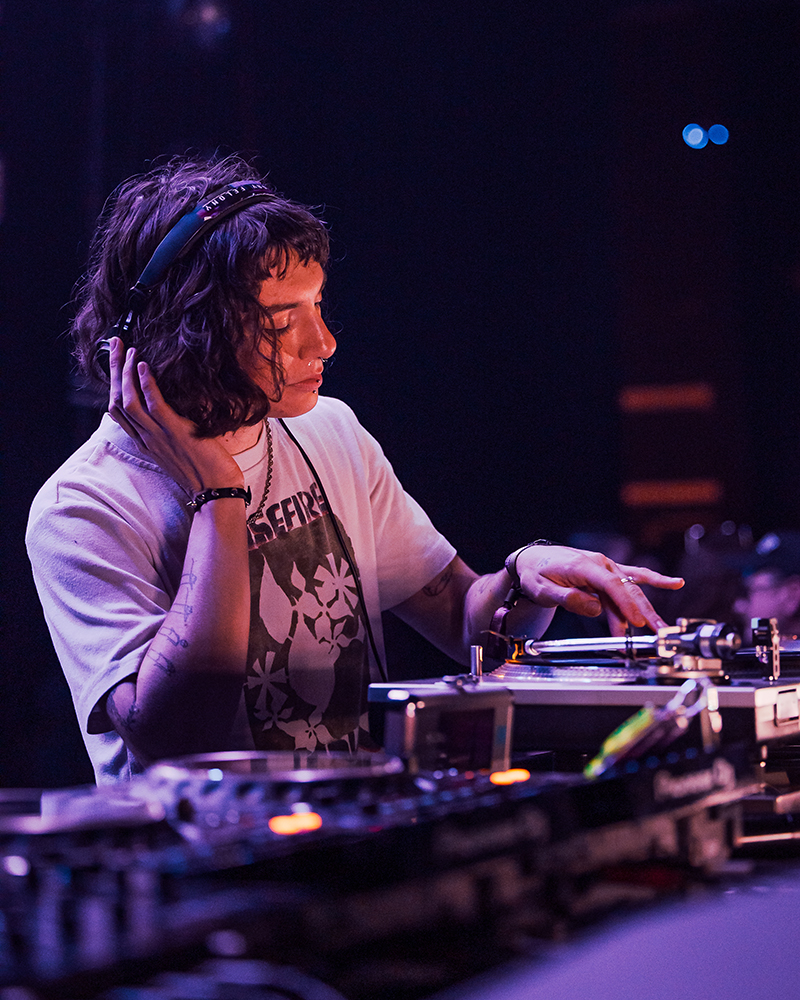
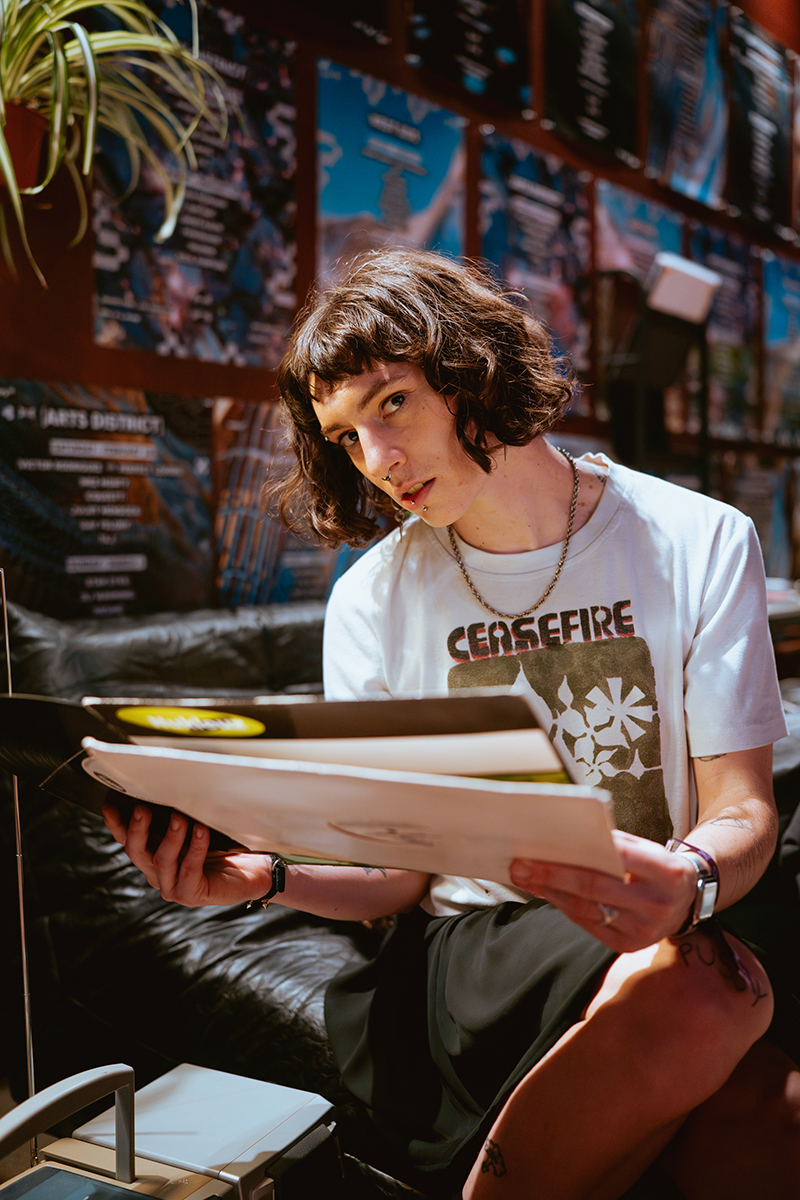
Gay Felony by Scott Hutchinson for Skyline.
Skyline’s greatest asset this year was the crowd. Every person I met over the weekend was open, friendly, laughing and genuinely happy to be there. There was a sense of mutual care running through the whole event: people checking on each other, sharing water, sharing dances and lighting up the blackened sky. The festival felt safe in the way that the best underground parties feel safe, not for lack of heavy-handed security but because the community itself holds the room. Los Angeles is all right, man. Everyone was there for the music, and that shared purpose created something that’s hard to manufacture. Skyline’s fifth anniversary was a rebirth. The move to Ace Mission Studios gave the festival more of an identity, and it added up to something that felt unmistakably like Los Angeles. The underground culture Skyline was built to celebrate.
I walked out in shambles. Ringing ears and sore legs, completely shattered to the core. Dead to the world. Catch you next year.

You may also like
The music worlds collide at FEQ, or that time Jessie Reyez stole the show
Héron, Nate Smith, Goldfinger and Gwen Stefani at FEQ 2026
Babe Rainbow bring the people to the dance floor
Beyond Wonderland Chicago 2026 review: DJ Snake, Green Velvet, and a weekend of electronic magic
From Nova Twins to 3OH!3: The best moments of Vans Warped Tour D.C.
Pond invite you to partake in the freakage on “Terrestrials”